Heavy legs at the end of the day usually come from hours of standing or sitting still. The calf muscle pump, which squeezes blood and fluid back up towards the heart, barely runs when your legs are motionless, so fluid settles in the lower leg and foot. Elevation, movement and warmth in the evening are what reverse the feeling.
Alex Moreno is a gear reviewer, not a doctor, physiotherapist or vascular specialist. This guide describes everyday habits, products and published research. It is not a diagnosis of your legs, and the safety box below lists the signs that need a clinician instead.
Affiliate disclosure: some links below are affiliate links. If you buy through them, Lume-Trixa may earn a commission at no extra cost to you. It does not change what this guide says or which studies it cites.
Why do my legs and feet feel heavy at the end of the day?
Because your legs spent the day at the bottom of your body with very little help moving fluid back up, and the result is a slow, gravity-driven build-up that you feel as weight rather than as pain.
The sensation is specific, and most people describe it in almost the same words. Legs feel full, thick, tired. Shoes that fitted at eight in the morning feel snug at six in the evening. Sock elastic leaves a groove around the ankle. Nothing hurts exactly, but standing up from the sofa feels like more effort than it should.
That is a different complaint from a sharp, mechanical pain in the sole of the foot. Heaviness is about fluid and fatigue. Sharp pain under load is about a structure taking strain, and the two respond to different things.
The good news is that end-of-day heaviness is one of the more responsive everyday complaints there is. It builds over roughly twelve hours and, for most people, it comes back down over twenty minutes of the right kind of rest.
What does the calf muscle pump have to do with it?
It is the part of your circulation that only works when you move, and a working day is very good at switching it off.
Blood leaving your feet has to travel back up against gravity. Your heart pushes blood out, but the return trip from the lower leg leans heavily on the calf. Every time you take a step, the calf muscles contract and squeeze the deep veins running through them, pushing blood upward, while one-way valves stop it sliding back down. Tissue fluid moves back into circulation on a similar principle, helped along by muscle movement rather than by pressure from the heart.
That system is designed around walking. It is not designed around standing still at a counter for seven hours, and it is not designed around sitting at a desk with your feet flat and your legs unmoved for the same stretch. In both of those positions the calf barely contracts, so the pump barely runs, and fluid tends to settle where gravity puts it.
The occupational health literature backs up how common the consequences are. Waters and Dick reviewed the evidence on prolonged standing at work in Rehabilitation Nursing in 2015 and found that long periods of standing are associated with low back pain, leg pain, fatigue and general musculoskeletal discomfort, and they looked at which workplace interventions actually help. Their review is about the working conditions rather than about any product, which is exactly why it is useful here: it establishes that the pattern is real and widespread, not a niche complaint.
Standing still, incidentally, is not obviously better than sitting still. What the calf wants is alternation. Ten minutes of walking every hour does more for the feeling in your legs than any single posture does.
The warm part of the routine, without doing the work yourself
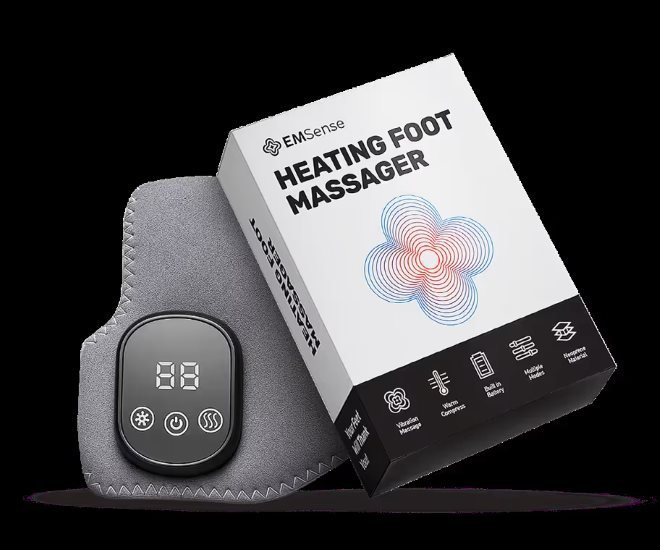
The EMSense is a cordless neoprene wrap that combines vibration massage with gentle warming, on a timed session of about fifteen to twenty minutes. It is a comfort device for tired, heavy-feeling feet at the end of the day, not a medical treatment.
Or read our full EMSense heated foot massager review, with the modes, the session length and what it does not do.
Why is it worse at night, and worse in hot weather?
Because it is cumulative, and because heat makes your blood vessels wider before you have had a chance to unload the day.
The cumulative part is straightforward. Heaviness is not something that arrives at six in the evening; it has been building since about ten in the morning. You do not notice hour three because the difference from hour two is tiny. By hour nine the total is large enough to feel, which is why the same legs that felt fine at lunchtime feel like they belong to someone else after dinner.
Hot weather adds a second layer. When you are warm, the vessels near the skin widen so your body can shed heat, and that is normal and useful. The side effect on a long, hot day is that the lower leg holds more, so the same amount of standing produces a heavier feeling in July than it does in February. Long flights and long car journeys do something similar for a different reason: the legs stay bent and still for hours with almost no calf contraction at all.
Two more things make the evening version worse than it needs to be. Dehydration, because people drink less on a busy shift than they think. And going straight from standing all day to sitting all evening, which keeps the legs low without ever giving the calf a reason to contract.
Is heavy legs the same as sore feet from standing all day?
No, and telling them apart saves you from buying the wrong thing.
Heaviness is a whole-limb, fluid-and-fatigue feeling. It affects the calf and ankle as well as the foot, it is worst at the end of the day, and it improves noticeably when you put your legs up. It is usually both sides, roughly equally.
Mechanical foot pain is different. It is sharp or stabbing rather than heavy, it lives in one place such as the heel or the arch, it is often worst on the first steps in the morning or when you stand up after sitting, and putting your legs up does very little for it. That pattern is about load and support rather than fluid, and it has its own answers. If that description fits you better, read our guide on why your feet hurt after standing all day instead, which covers the mechanical side and a simple self-check.
Plenty of people have both at once, especially anyone who works a full shift on hard floors. In that case treat them as two separate jobs: support and load-spreading during the day, elevation and warmth in the evening.
What is a 20 minute end-of-day routine for heavy legs?
Five steps, in this order, done once in the evening. The order matters, because you want gravity working for you before you start adding movement and warmth.
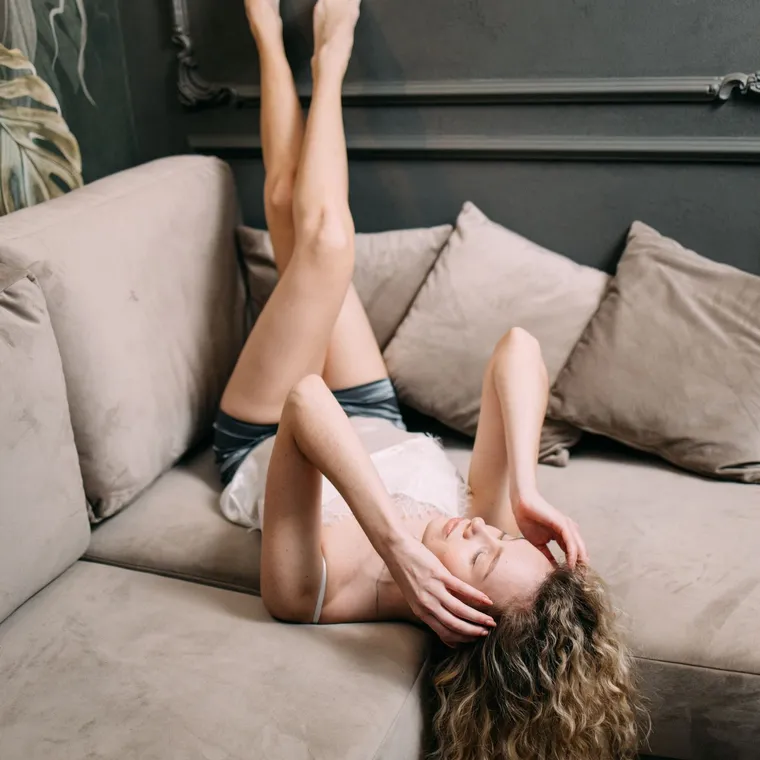
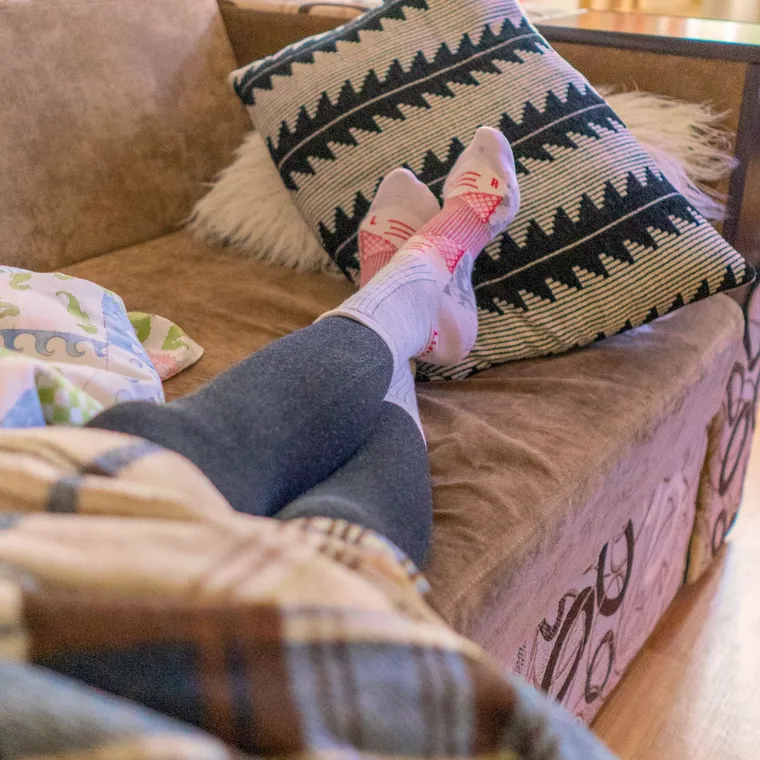
- 1. Legs up, above hip level, for 10 minutesLie down and put your calves on the sofa arm, a stack of cushions or the wall. Higher than your hips is the part that counts, not just "up". Set a timer and let it run properly rather than doing three minutes and calling it done.
- 2. Ankle circles and foot pumps, 2 minutesWhile the legs are still up, draw twenty slow circles with each ankle in each direction, then point and flex the foot twenty times. This is you manually running the calf pump that the day switched off. It should feel like nothing more than gentle movement.
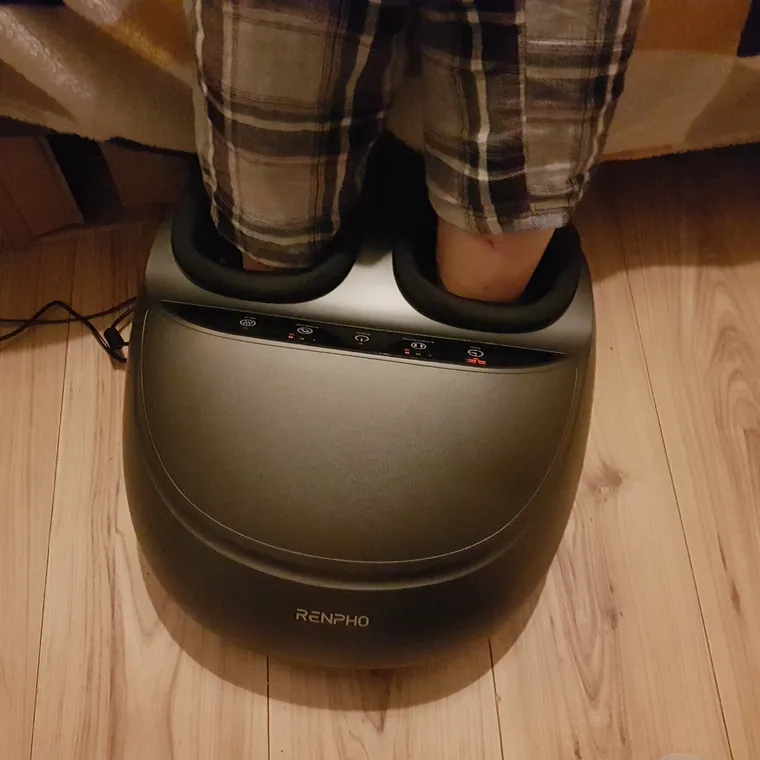
- 3. Warm the feet, 10 to 15 minutesA warm foot bath, thick socks, or a heated foot massager. Warmth relaxes and loosens soft tissue and reduces the discomfort of stiffness, and warming the feet widens the local blood vessels so more blood flows through the area, which is what makes the feet feel lighter and looser.
- 4. Firm pressure along the arch and calf, 3 to 5 minutesWork from the toes upwards towards the knee, never downwards, using firm but comfortable pressure. Thumbs along the arch, then both hands around the calf. If doing it by hand is the reason you skip this step, this is the part a massager takes over.
- 5. A glass of water and a short walk to bedUnglamorous and genuinely useful. A hundred steps around the house before you lie down gives the calf one last set of contractions after everything else.
Done properly the whole thing is twenty to twenty five minutes, and it fits inside an episode of something. The part people drop first is step one, because lying with your legs up feels like doing nothing. It is the step doing the most work.
What is normal end-of-day heaviness, and what is not?
Normal is both legs, gradual through the day, better by morning, and clearly better after twenty minutes with your feet up. That is the pattern this whole article is about, and it responds to the routine above.
What is not normal is swelling or pain that shows up on one side only, especially if it is new. New swelling in one calf, or a calf that is painful, warm or tender when the other one is fine, is the pattern that needs to be looked at promptly by a clinician rather than rubbed, warmed or stretched. That is not a scare line, it is the one genuinely important thing to know about heavy legs.
Also worth a medical opinion rather than a gadget: swelling that is still there when you wake up, swelling that comes with breathlessness, a sore or broken skin on the foot that is not healing, skin changes such as thickening or discolouration around the ankle, and any heaviness that started suddenly rather than building up over months.
And to be plain about what a massager is and is not: it is not a compression device. Significant fluid swelling needs medical compression, and persistent swelling should be checked by a doctor. A heated massager belongs to the comfort side of the routine, which is the side most end-of-day heaviness actually sits on.
If you have diabetes, reduced feeling in your feet, new one-sided swelling, or a sore that will not heal, see a clinician before using heat or massage on your feet, because heat you cannot feel is heat you cannot control. New swelling on one side only, or calf pain and warmth, should be checked promptly rather than massaged.
Where does a heated foot massager fit into the routine?
It covers steps three and four at the same time, which are the two steps people skip most often because they take effort.
Warmth and pressure are the parts of the routine that need either equipment or someone else's hands. Rubbing your own arches and calves properly for five minutes is more tiring than it sounds, especially after a long shift, and the hot towel or foot bath version cools down within a few minutes of you settling in. A heated wrap holds the temperature for the whole session and delivers the pressure without you working for it, which in practice is the difference between a routine you do once and a routine you do every evening.
What to expect from it is comfort. Your feet feel warmer, looser and less tired after a session, and that is a real and useful thing at nine in the evening. What not to expect from it is a medical result: it does not reverse nerve problems, it does not change a circulation diagnosis, and it is not a substitute for medical compression if you have significant swelling. That is the same line our review takes, and it is the honest one.
If the sleep angle is what interests you, there is decent published evidence on foot pressure and warmth at bedtime, which we go through in does a foot massage actually help you sleep. And if you are not sure whether your legs want warmth or an ice pack tonight, heat or cold for tired, aching feet gives you the rule in one line.
The device we use for steps three and four
Cordless, no cable at your feet, warm compression plus vibration, and it shuts off on its own at the end of the session. Our review has the modes, the honest limits and our score.
Read the full EMSense foot massager review first if you want the long version.
Frequently asked questions
How high should I raise my legs, and for how long?
Above the level of your hips is the target, which usually means lying down rather than sitting in a chair with your feet on a stool. The calves on the arm of the sofa, on a stack of cushions or against a wall all work. Ten to fifteen minutes is enough for most people to feel a difference, and doing it once in the evening beats doing it for two minutes several times.
Does drinking less water help with heavy, swollen-feeling legs?
No, and it tends to make the day feel worse rather than better. People who are on their feet at work often drink less than they need because breaks are short, and that is not the lever to pull here. Movement and elevation are what move fluid back out of the lower leg, not restricting fluid going in.
Should I move around during a shift, or stand still and rest?
Move. Standing still is the position in which the calf muscle pump barely runs at all, so a few minutes of walking every hour, shifting weight between feet, or using a footrest to change your stance does more for evening heaviness than staying planted. Waters and Dick's 2015 review of prolonged standing at work looked specifically at which workplace interventions help, and varying position and load is the theme running through them.
Will a foot massager reduce swelling in my ankles?
It may help the feet feel lighter and looser through warmth and gentle massage, but it is not a compression device. Significant fluid swelling needs medical compression, and persistent swelling should be checked by a doctor. Treat a heated massager as the comfort part of your evening, not as a treatment for swelling.
Is heavy-feeling legs the same problem as heel pain in the morning?
Usually not. Heaviness is a fluid and fatigue feeling across the whole lower leg that improves when you elevate. Sharp pain on the first steps of the morning is a mechanical, load-related pattern that elevation does very little for. Our guide on why your feet hurt after standing all day covers that second pattern.
Sources
- Waters TR, Dick RB. "Evidence of health risks associated with prolonged standing at work and intervention effectiveness." Rehabilitation Nursing, 2015;40(3):148-165. pubmed.ncbi.nlm.nih.gov/25041875
- Heat therapy relaxing and loosening soft tissue, reducing the discomfort of muscle stiffness and spasm, and warming the feet widening local blood vessels so more blood flows through the area. Summary citing the Mayo Clinic. medmassager.com
- Kräuchi K, Cajochen C, Werth E, Wirz-Justice A. "Warm feet promote the rapid onset of sleep." Nature, 1999;401(6748):36-37. pubmed.ncbi.nlm.nih.gov/10485703
Image credits: photographs via Pexels.

About the author
Alex Moreno writes the everyday-gear guides at Lume-Trixa. He buys the products with his own money, uses them for weeks rather than an afternoon, then reads the published research behind the idea. He is not a doctor, physiotherapist or vascular specialist, and every foot and leg guide he writes says so.
More about Alex Moreno ›Keep reading
- Does a foot massage actually help you sleep? What 42 randomised trials found on foot reflexology and sleep quality, and the honest limit on applying that to a device.
- Heat or cold for tired, aching feet? The one-line rule, the four things never to do, and where a heated massager fits.
Affiliate disclosure: some links on this page are affiliate links. If you buy through them we may earn a commission, at no additional cost to you. This does not affect our editorial assessment or the scores we publish. Content in this guide is general information about everyday habits, products and published research, not medical advice, and it is not a substitute for having a persistent problem examined by a clinician.