Use warmth for the everyday version: feet that are tired, stiff and aching after a long day on them. Use cold for a fresh injury: a knock, a twist, or a spot that is newly swollen and inflamed. If nothing happened to your foot and it just feels worn out, that is a heat situation.
Alex Moreno is a gear reviewer, not a doctor or a physiotherapist. This guide covers everyday self-care choices. It is general information, not medical advice, and the safety box below lists who should not use heat without checking first.
Affiliate disclosure: some links below are affiliate links. If you buy through them, Lume-Trixa may earn a commission at no extra cost to you. It does not change what this guide says or which studies it cites.
The one-line rule
Heat for chronic and tired. Cold for acute and injured.
Almost every "should I use heat or ice" question comes down to that split. Warmth suits the slow, dull, been-on-my-feet-all-day kind of ache, where nothing is damaged and the tissue is just tight and fatigued. Cold suits the sharp, recent, something-just-happened kind, where there is fresh swelling and you want to calm it down.
The reason they are not interchangeable is that they do opposite things to blood flow. Warmth widens the local blood vessels and relaxes soft tissue. Cold narrows them and numbs the area, which is what you want in the first day or two after an injury and the opposite of what you want for a stiff, tired foot.
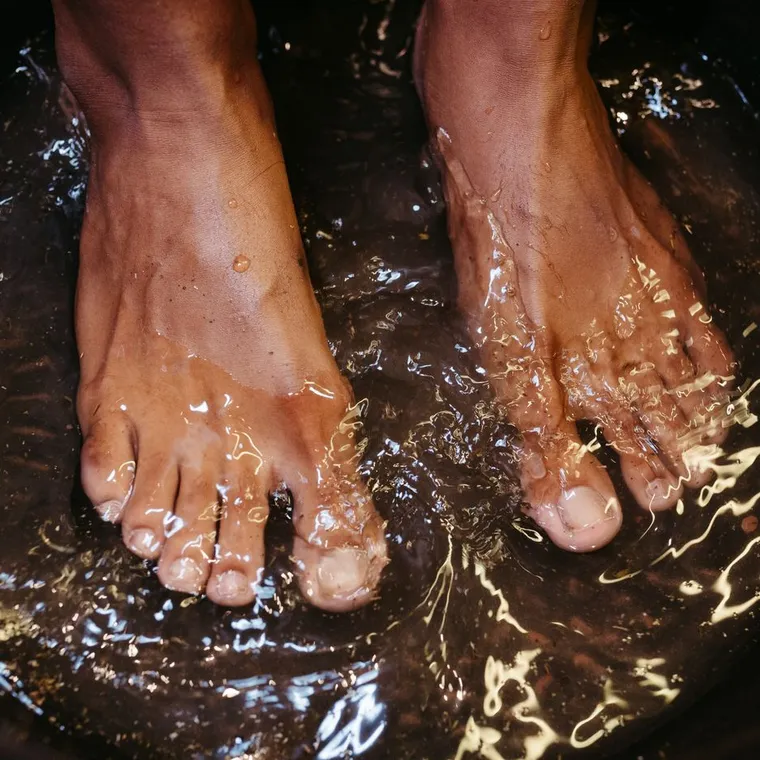
When warmth is the right call
This is the common one, and it is the situation a warm foot bath, thick socks or a heated foot device is built for.
- Tired, aching feet after a long day standing or walkingNo injury, just fatigue. Warmth relaxes and loosens the soft tissue and eases the discomfort of stiffness, and it makes the feet feel less like blocks at the end of the day.
- Stiff feet first thing, or after sitting a whileGentle warmth before you get moving can take the edge off that start-up stiffness. It is a comfort measure, not a fix for whatever is causing the stiffness.
- Cold feet that will not settle at bedtimeWarming the feet in the evening is linked to falling asleep faster, because it helps your body shed core heat as you settle. We cover that in does a foot massage actually help you sleep.
- General end-of-day heaviness in the feet and lower legsWarmth is part of the wind-down routine here, alongside elevation and gentle movement, which we set out in why do my legs feel heavy at the end of the day.
When cold is the right call
Cold is for events, not for wear and tear.
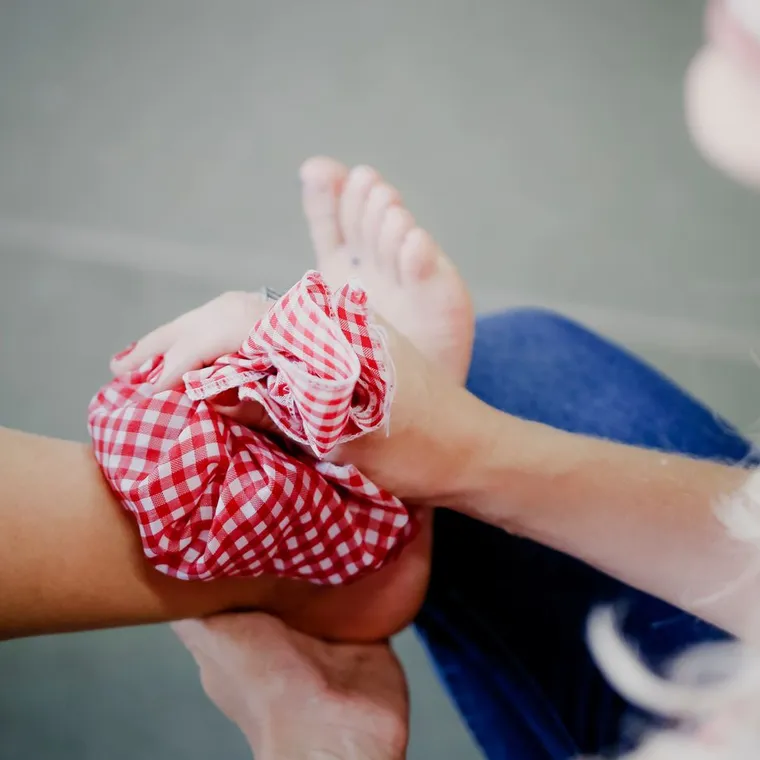
- A fresh knock, twist or roll of the ankleIn the first day or two, cold helps limit swelling and numbs the sharp pain. This is the classic use, alongside rest and elevation.
- A specific spot that is newly swollen, hot or throbbingIf one area has flared up suddenly, cold calms it. Warmth on a freshly inflamed spot tends to make the throbbing worse.
- Pain that spikes right after activityIf a run or a long walk leaves one part of the foot sharply painful and puffy straight afterwards, cold for that first evening is the safer choice, then reassess.
After the first couple of days, once the fresh swelling has settled, many people switch to gentle warmth to ease the lingering stiffness. If a fresh injury is not improving after a few days, or you cannot put weight on it, that is a reason to get it looked at rather than to keep experimenting with a bag of peas.
Four things never to do
- Do not put ice directly on skin. Wrap it in a thin cloth and limit it to short spells of around ten to fifteen minutes, with breaks. Direct ice can cause a cold burn.
- Do not use heat on a fresh injury. For the first day or two after a knock or a twist, heat can increase swelling and make it worse. Cold first, warmth later.
- Do not use heat if you cannot feel it properly. Reduced sensation in the feet, from diabetes or nerve issues, means you cannot judge whether the heat is too high, and a burn can happen without you noticing.
- Do not fall asleep on a heating device. Use one with an automatic shut-off, keep the setting comfortable rather than maximal, and do not use it in bed where you might drift off on it.
If you have diabetes, reduced feeling in your feet, poor circulation, an open sore, or new one-sided swelling, talk to a doctor or podiatrist before using a heated foot device, because heat you cannot fully feel is heat you cannot safely control. A fresh injury that is not improving in a few days, or that you cannot bear weight on, needs to be assessed in person.
Where a heated foot massager fits
Squarely on the warmth side, for the tired-and-stiff situation rather than the injured one.
The advantage a device has over a foot bath or a hot towel is that it holds the temperature for the whole session and adds pressure at the same time, which is the combination the evening-recovery research leans on. The honest limits are the same ones our review states: it is a comfort tool, not a treatment, it does not reverse nerve problems or a circulation diagnosis, and it is not a substitute for medical compression if you have significant swelling. For everyday worn-out feet, it is a reasonable way to make the warm part of a wind-down routine something you actually keep doing.
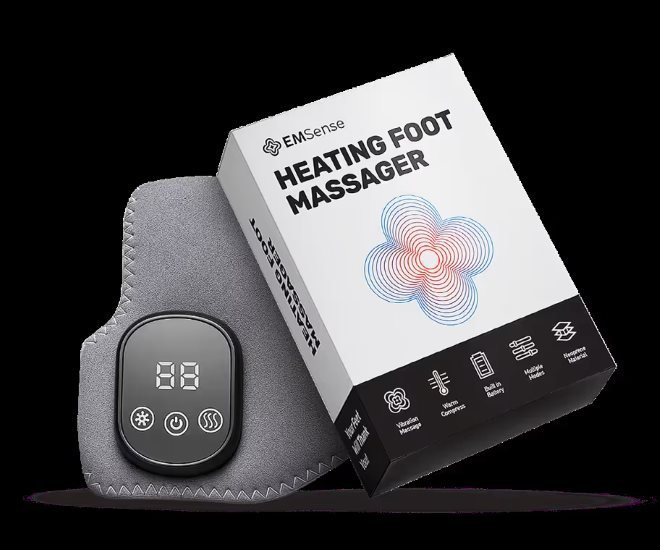
The warmth-side device we reviewed
The EMSense is a cordless neoprene wrap combining vibration massage with gentle warming, on a timed 15 to 20 minute session that shuts off by itself. It is for tired, stiff feet at the end of the day, not for a fresh injury.
See the current price and the return window on the official storeOr read our full EMSense heated foot massager review, with the modes and what it does not do.
Frequently asked questions
Should I use heat or ice for plantar fasciitis type heel pain?
People commonly use cold on the heel straight after activity when it is sharply painful, and gentle warmth at other times to ease stiffness, for example before getting moving in the morning. Neither is a treatment for the underlying problem. If first-step heel pain is a regular thing, our guide on why your feet hurt after standing all day covers what actually helps.
How long should I apply cold for?
Short spells of around ten to fifteen minutes, with the pack wrapped in a thin cloth, and breaks in between rather than one long session. Never put ice directly against skin, and stop sooner if the area goes numb or the skin looks very pale or mottled.
Can I alternate heat and cold?
Some people do, usually for a lingering ache that is past the fresh-injury stage, ending on whichever feels better. For a simple tired-feet situation there is no need to complicate it: warmth is the straightforward choice. For anything in the first day or two after an injury, stick to cold.
Is a warm foot bath as good as a heated massager?
For the warmth itself, a foot bath is fine and free. The practical difference is that it cools within a few minutes and does not add pressure, while a device holds the temperature for the session and massages at the same time. The main reason to choose a device is that people keep using it, where the foot bath tends to get skipped.
Sources
- Heat therapy relaxing and loosening soft tissue, reducing the discomfort of muscle stiffness, and warming widening local blood vessels so more blood flows through the area. Summary citing the Mayo Clinic. medmassager.com
- American Academy of Orthopaedic Surgeons, OrthoInfo. "Plantar Fasciitis and Bone Spurs", including the use of ice for pain relief. orthoinfo.org
- Kräuchi K, Cajochen C, Werth E, Wirz-Justice A. "Warm feet promote the rapid onset of sleep." Nature, 1999;401(6748):36-37. pubmed.ncbi.nlm.nih.gov/10485703
Image credits: photographs via Pexels.

About the author
Alex Moreno writes the everyday-gear guides at Lume-Trixa. He buys the products with his own money, uses them for weeks rather than an afternoon, then reads the published research behind the idea. He is not a doctor or a physiotherapist, and every foot and leg guide he writes says so.
More about Alex Moreno ›Keep reading
- Why do my legs feel heavy at the end of the day? The calf muscle pump, why night and hot weather are worse, and a 20 minute evening routine.
- Does a foot massage actually help you sleep? What 42 randomised trials found on foot reflexology and sleep, and the honest limit on applying it to a device.
Affiliate disclosure: some links on this page are affiliate links. If you buy through them we may earn a commission, at no additional cost to you. This does not affect our editorial assessment or the scores we publish. Content in this guide is general information about everyday self-care and published research, not medical advice, and it is not a substitute for having a persistent or worsening problem examined by a clinician.