Researchers have used TENS machines with modified ear electrodes in the lab, so the idea has a real basis. At home it becomes a do-it-yourself job: TENS is sold for pain relief, NHS guidance says not to use it on your neck, and placement, settings and session length are left to you. A purpose-built device packages those decisions.
The NHS says not to use TENS if you have epilepsy or a pacemaker, or if you are pregnant unless your doctor or midwife tells you to, and not to use it on your neck, mouth or eyes. This guide does not give TENS settings for home vagus nerve stimulation.
Affiliate disclosure: one link on this page is an affiliate link. If you buy through it, Lume-Trixa may earn a commission at no extra cost to you. We do not sell TENS units or accessories.
The question makes sense. A TENS unit is a small box that sends a mild current through pads on the skin, which is also what a vagus nerve stimulator does. If you already own one, from physical therapy or for period pain, and you have seen ear clips searched alongside it, the obvious question is why you would buy a separate device.
The short version: the current is similar, and the job is different. Here is what the research did, what public health guidance says, and what is left for you to work out.
Can a TENS unit reach the vagus nerve at all?
In a lab, yes. A University of Leeds team, Clancy and colleagues, published a study in Brain Stimulation in 2014 that did exactly this. They stimulated the small branch of the vagus nerve that reaches the skin of the ear, using a TENS machine fitted with modified surface electrodes.
Forty-eight healthy participants made a single lab visit. Thirty-four received active stimulation at 200 microseconds and 30 Hz, and fourteen received sham stimulation. Active stimulation raised heart rate variability and reduced muscle sympathetic nerve activity recorded directly from a nerve, a shift the authors describe as toward parasympathetic predominance, the body's "rest" side.
Three details matter for anyone thinking of copying it. The electrodes were modified for the ear. The settings were chosen by researchers. And it was one supervised session, measured with lab equipment. That proves the route is possible. It does not hand you a home routine.
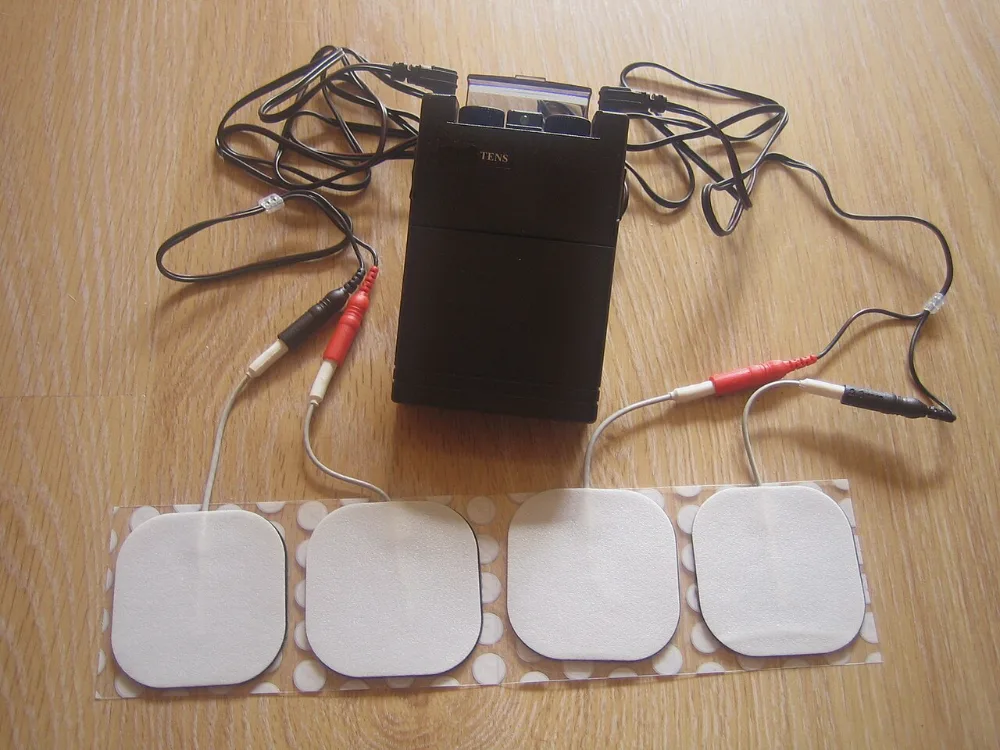
What does the NHS say about using TENS on your neck?
It says not to. The NHS page on TENS, last reviewed in February 2025, describes TENS as a treatment that gives temporary pain relief, and lists places not to use it: "Do not use TENS on your neck, mouth or eyes". It also says not to use it on your chest and back at the same time, while you sleep, in the bath or shower, or while driving.
That rule belongs to TENS machines. A neckband is a separate kind of device, and its maker publishes its own safety list (below).
The same page tells you not to use TENS at all if you have epilepsy or a pacemaker, or if you are pregnant unless your doctor or midwife tells you to. And it points you to the leaflet that comes with your machine for the full list.
Ear clips sit in a grey area. The NHS page does not mention them. The safe reading is that you would be using a pain-relief machine for a purpose its leaflet does not cover, so the questions go to a healthcare professional before the first try.
Which settings did the vagus nerve studies actually use?
Different ones, every time. That is the core problem with the do-it-yourself route. Here are three published studies and one FDA-cleared device, side by side.
Research settings, shown for comparison only. Do not copy these into a TENS unit.
| Source | Where | Settings | How long |
|---|---|---|---|
| Clancy 2014, Brain Stimulation | Ear, TENS machine with modified electrodes | 30 Hz, 200 microseconds | One lab session |
| Jackowska 2025, Biological Psychology | Left tragus, dedicated ear-clip stimulator | 25 Hz, 250 microseconds, intensity set at each person's sensory threshold | 4 hours a day for 14 days, split as participants chose |
| Ahmed 2026, American Journal of Physiology | Both sides of the neck | 41 Hz, 100 microseconds | One lab session |
| gammaCore-S, FDA clearance K173442 (2018) | Side of the neck, prescription device | Set by the device | 120-second stimulations |
Sources: the three papers and the FDA 510(k) summary for K173442, listed below. The Ahmed study's ear groups used a different setting again: 10 Hz and 300 microseconds. These are research settings, reported for comparison, not a recipe for home use.
Four sources, four recipes. Frequency ran from 10 to 41 Hz across the groups, pulse width from 100 to 300 microseconds, and stimulation time from a two-minute cycle to four hours a day. A TENS box shows none of this for the vagus nerve. TENS is sold for temporary pain relief, as the NHS describes it.
What does the TENS route leave you to work out?
Count the decisions a researcher made for their participants, and you have the list you would be making alone.
- Placement. The Jackowska trial used the left earlobe as its sham site because, in the authors' words, it is "not innervated by the vagus nerve". Where the clip sits on the ear decides whether it is over the nerve branch at all.
- Frequency and pulse width. As the table shows, there is no single agreed recipe, and TENS is sold for temporary pain relief.
- Intensity. Trials set it individually, at a sensation threshold, and checked how participants applied the device.
- Session length. From two minutes to four hours, depending on the source.
- Skin care. The NHS says to stop and remove the pads if your skin becomes itchy, irritated or red.
None of that is impossible. It is simply a research project, with you as the only participant and no one checking the setup.
What changes with a device built for vagus nerve sessions?
A purpose-built neckband is designed for placement on the neck, ships with conductive gel for its two contacts, and runs programs from an app. Placement, session length and program come built in; you still pick your comfort level in the app. Most of the Pulsetto Fit's programs run 4 minutes, and its sleep program runs 10. Its maker sells it as a general wellness product for stress and sleep routines (our guide on what FDA approval does and does not cover explains that label), and publishes who should not use it, starting with anyone who has an active implant such as a pacemaker.
That is also why our safety checklist for vagus nerve stimulators applies to both routes. For the device itself, our review of the short neck sessions, price and return terms covers what the first weeks involve.
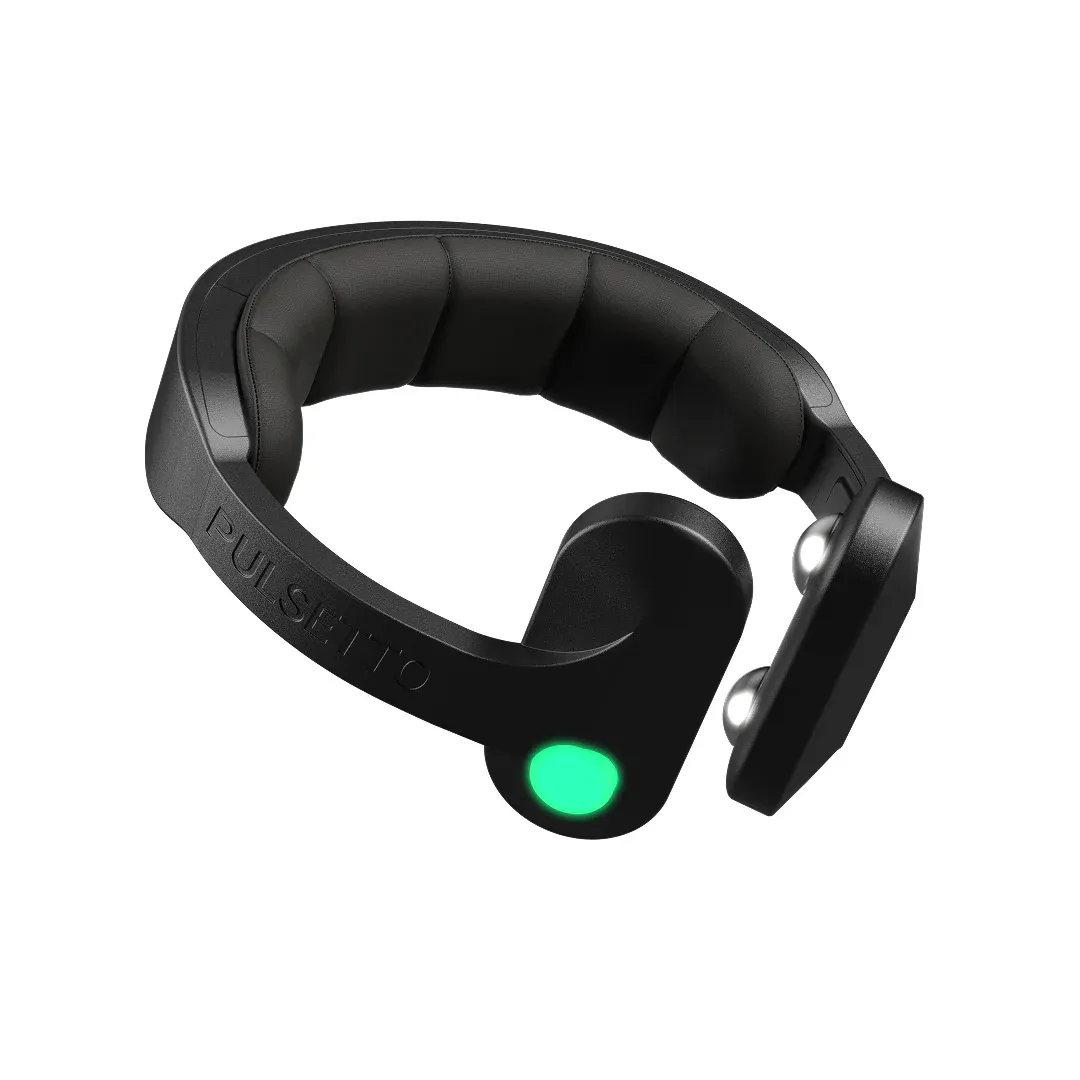
Built for the neck
Placement, session length and program come built in; you still pick your comfort level in the app. The brand's page shows what is in the box and the current price.
See the neckband and its current priceIf you already own a TENS unit, what should you do with it?
- Use it for what it is sold for.Temporary pain relief, with the pads placed as its leaflet describes.
- Keep it off your neck, mouth and eyes.That is the NHS guidance, and it holds whatever you have read online.
- Ask before experimenting with ear clips.A physiotherapist or doctor can tell you whether it suits you, and whether your health history rules it out.
- If you want daily vagus nerve sessions, choose a device made for them.One with its own placement, programs and safety list.
Frequently asked questions
Can you use a TENS unit on your neck for vagus nerve stimulation?
NHS guidance says not to use TENS on your neck, mouth or eyes. TENS is sold for temporary pain relief, and its settings and pads are designed for that job. Devices made for vagus nerve stimulation on the neck come with their own placement, programs and safety lists.
Has research used TENS machines for vagus nerve stimulation?
Yes, in the lab. A 2014 University of Leeds study in Brain Stimulation used a TENS machine with modified ear electrodes in 48 healthy adults, in a single supervised session at 30 Hz and 200 microseconds, and found higher heart rate variability with active stimulation. That shows the route is possible under research conditions, not that a home TENS kit is set up for it.
Is a TENS unit the same as a vagus nerve stimulator?
Both pass a mild current through the skin, but they are built for different jobs. TENS is sold for temporary pain relief with pads near the painful area. A vagus nerve stimulator is designed for a specific placement, with timed programs and its own list of people who should not use it.
Who should not use TENS?
The NHS says not to use TENS if you have epilepsy or a pacemaker, or if you are pregnant unless your doctor or midwife tells you to. It also says not to use it on irritated, broken, infected or numb skin, on your neck, mouth or eyes, or while sleeping, bathing or driving.
Sources
- Clancy JA, Mary DA, Witte KK, Greenwood JP, Deuchars SA, Deuchars J. "Non-invasive vagus nerve stimulation in healthy humans reduces sympathetic nerve activity." Brain Stimulation, 2014;7(6):871-877. 48 healthy participants, TENS machine with modified surface electrodes, single visit, active (200 microseconds, 30 Hz; n = 34) or sham (n = 14). pubmed.ncbi.nlm.nih.gov/25164906
- Jackowska M, Koenig J, Cibulcova V, Jandackova VK. "Effects of transcutaneous vagus nerve stimulation on subthreshold affective symptoms and perceived stress: findings from a single-blinded randomized trial in community-dwelling adults." Biological Psychology, 2025;202:109169. Methods section 3.2: 4 hours (240 minutes) a day for 14 days, segments chosen by participants, left tragus active site, left earlobe sham site, 250 microseconds at 25 Hz. pubmed.ncbi.nlm.nih.gov/41290087
- Ahmed R, Coello A, Pillutla AS, Telwar G, Stauss HM. "Acute transcutaneous cervical but not auricular vagus nerve stimulation increases alpha wave brain activity and lowers arterial blood pressure." American Journal of Physiology, Regulatory, Integrative and Comparative Physiology, 2026;330(1):R49-R59. Bilateral cervical stimulation at 41 Hz and 100 microseconds; ear stimulation at 10 Hz and 300 microseconds. pubmed.ncbi.nlm.nih.gov/41389012
- US FDA, 510(k) K173442, gammaCore-S, decision date 23 January 2018, and its 510(k) summary (side of the neck, prescription use only, 120-second stimulations). accessdata.fda.gov, K173442
- NHS, "TENS (transcutaneous electrical nerve stimulation)", page last reviewed 14 February 2025. nhs.uk
Image credits: "Tens.jpg" by Yeza, CC BY-SA 4.0, via Wikimedia Commons, resized and converted to WebP; this adapted image is shared under the same license. Product photograph from the brand.

About the author
Alex Moreno writes the health-gadget guides at Lume-Trixa. His interest started at home: his grandmother spent years with intense, burning nerve pain that her doctors struggled to explain in simple terms. That sent him into reading about nerve conduction, inflammation, supplementation and health technology, and into tracking sleep and body data with wearables to look for triggers. He chooses and buys the products he writes about himself, the way any shopper would, then checks them against the published research. He is not a doctor, and his guides are general information, not medical advice.
More about Alex Moreno ›Keep reading
- Who should not use a vagus nerve stimulator? Implants, pregnancy, epilepsy, heart conditions, age and skin, with every source named.
- How to stimulate the vagus nerve naturally Slow breathing with a long exhale, humming, brief cold, movement and sleep, done properly.
Affiliate disclosure: some links on this page are affiliate links. If you buy through them we may earn a commission, at no additional cost to you. This does not affect our editorial assessment or the scores we publish. Content in this guide is general information about consumer devices and published sources, not medical advice, and it is not a substitute for care from a qualified professional.