Mostly because keys get put down on autopilot, while your attention is somewhere else, so there is no clear memory of where they went. Walking into another room makes it worse. It is normal and very common. The fix is a fixed drop spot for your keys, plus a small Bluetooth tracker that rings them when the habit slips.
Alex Moreno is a gear reviewer, not a doctor or psychologist. This guide explains everyday memory research in plain language. It is not a diagnosis.
Affiliate disclosure: some links below are affiliate links. If you buy through them, Lume-Trixa may earn a commission at no extra cost to you. It does not change what this guide says or which studies it cites.
Why do I keep losing my keys?
Because you put them down on autopilot. Keys get handled at the busiest moments of the day: walking in with shopping bags, answering a message, getting a child out of the car. Your hands put them somewhere while your attention is elsewhere, so the moment never gets stored. That is not carelessness, and it happens to organised people too.
Moving between rooms adds to it. Radvansky, Krawietz and Tamplin, writing in the Quarterly Journal of Experimental Psychology in 2011, tested what psychologists call the location-updating effect: memory for objects declines when people move from one location to another. They found it in a virtual setting and in a real building. When people were taken back to the original room, their memory did not improve.
So walking back to "where you had them" is a weaker strategy than it sounds. The stronger move is making sure there is only ever one place they can be.

Is it normal to keep losing things?
Yes, and it is very common. In a survey of more than 1,700 Americans run by Survey Sampling International for the tracker maker Pixie in October 2016, people reported spending about 2.5 days a year looking for lost items. The category "car and keys" was misplaced at least once a week by 28 percent of respondents.
The same survey found that more than 60 percent had been late to work or school because they were searching for something.
The National Institute on Aging says it is normal to forget things once in a while at any age, and it lists losing things from time to time as a typical age-related change.
The National Institute on Aging lists misplacing things often and being unable to find them as a possible sign of a more serious memory problem, especially alongside trouble with everyday tasks such as driving, using the phone or finding the way home. If that describes you or a parent, raise it with a doctor. A tracker helps you find things. It is not a memory check.
How do I stop losing my keys?
Give your keys one home, then tie that home to a moment you never miss. The research name for the second part is an implementation intention: a plan written as "if situation Y happens, then I will do X".
Chen and colleagues pooled 36 comparisons in a meta-analysis published in Psychiatry Research in 2015. If-then plans improved prospective memory, which means remembering to do something at the right moment. The effect size was d = 0.445 in healthy young adults and d = 0.680 in older adults, and saying the plan while picturing it scored higher than words alone, at d = 0.590.
Those studies tested the strategy in general, not keys specifically, but putting keys down is exactly the kind of action that slips when the moment arrives.
- 1. Pick one home by the door.A hook, a bowl or a tray at the entrance you use most, not the kitchen counter you pass later.
- 2. Write your if-then plan."When I close the front door, my keys go on the hook." Say it once and picture yourself doing it.
- 3. Touch-check before you leave.Phone, keys, wallet, with a tap on each pocket. Ten seconds at the door saves the ten-minute hunt.
- 4. Cover the days the habit slips.Guests, bags in both hands, a new routine after a move. That gap is what a tracker tag is for.
Want a backup for the days the habit slips?
The iTagPro is a small Bluetooth tag for a keyring or a bag. Tap the app and the tag rings. Press its button and your phone rings. We reviewed it in full, including how it tracks and the guarantee terms.
See the current price and the 30-day guarantee on the official storePrefer the long version first? Read our full iTagPro review, with how it tracks, the battery life and the return terms.
What should I do when I lose my keys right now?
Search in a fixed order, not in a panic: the pockets you came in wearing, the bag you carried, the lock on the front door, then wherever you put down the shopping or the post, since keys tend to go down with whatever else was in your hands.
With a tracker, skip all of that. Open the app, make the tag ring and follow the sound. If the keys are not nearby, the app shows where your phone last saw them.
How do I avoid losing luggage when flying?
Plan around connections and know where your bag is. SITA's 2026 Baggage IT Insights report counted 24 million mishandled bags in 2025 among 5 billion passengers. The mishandling rate fell 23 percent that year, yet transfers were still the biggest single cause, at 39 percent of cases.
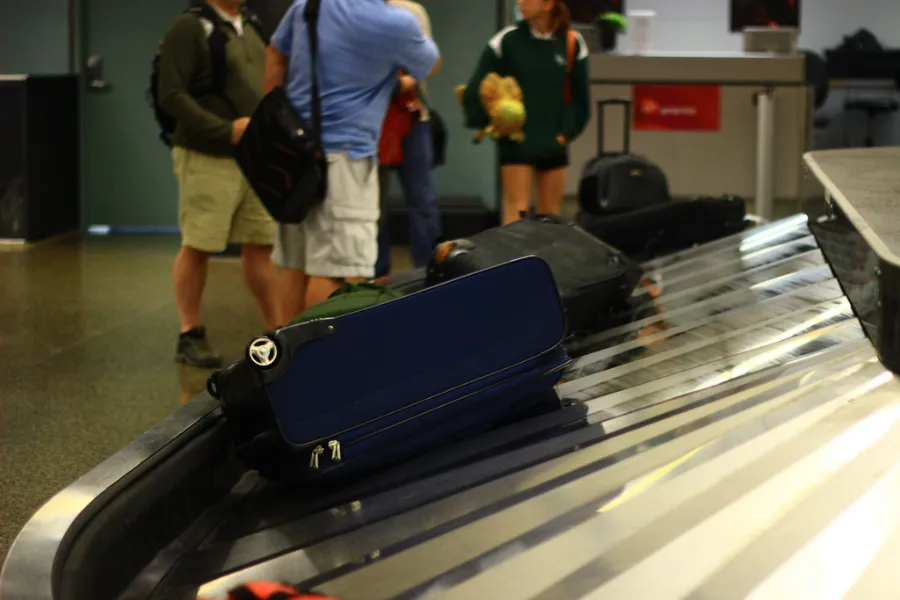
- Choose longer connections or fly direct when you can.
- Put your name and number inside the bag, not only on the outside tag.
- Photograph the bag and its contents before check-in.
- Drop a tracker tag inside so the app can show where the bag was last seen.
What is the best way to keep track of your keys?
A fixed habit plus a Bluetooth tracker tag: the habit prevents most losses, and the tag handles the rest. Nearby, you make the tag ring; out of range, the app marks where it was last seen. Better tags also ring your phone from the tag and alert you when an item leaves a safe zone.
Check which phones a tag works with. Apple's January 2026 announcement says the new AirTag requires a compatible iPhone with iOS 26 or later, or an iPad with iPadOS 26 or later. If anyone in your home uses Android, you need a tag that works on both.
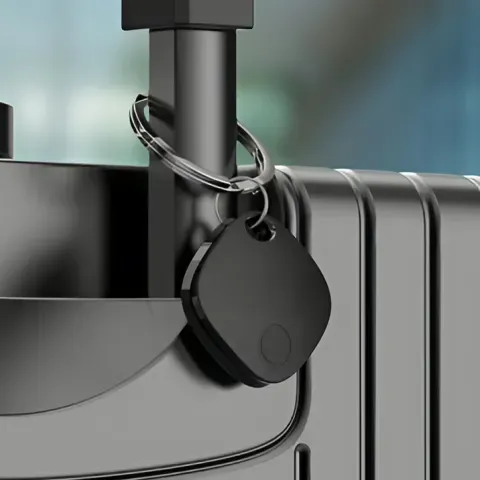
That is where the iTagPro fits. It works on iPhone and Android through a free app, has a loud two-way ring, shows the last known location, sends left-behind alerts and charges no monthly fee. It runs on a replaceable CR2032 coin cell that the maker rates for up to six months. For a dog in the yard, a safe-zone alert tells you when the tag leaves the area you set.
Plan for one thing: it works through your phone over Bluetooth, so keep Bluetooth on and the app installed. Walls shorten any Bluetooth link.
“I used to lose my keys daily. Now I just tap the app, and beep! Found in seconds. A total lifesaver!”
Mark Nolan, verified customer review on the official iTagPro store, checked 29 September 2026“My dad is older and has a habit of misplacing his cane, keys, and sometimes even his phone. I put an one of these on his cane and another on his keychain, and now he doesn’t have to stress about finding them.”
Kevin Dawson, verified customer review on the official iTagPro store, checked 29 September 2026Results vary with how and where you use it.
So what would we do first?
Tonight, pick the one spot by the door and set your if-then plan. Tomorrow, do the touch-check before you leave. Then put a tag on the keyring and one in your travel bag, so when the habit slips, the search takes seconds instead of the whole morning.
The tag we reviewed for keys, bags and luggage
The iTagPro works on iPhone and Android, rings both ways and has no monthly fee. The official store offers a 30-day money-back guarantee, and our review lists the return conditions.
See the current price and the guarantee on the official storeOr read the full iTagPro review with our verdict and the battery notes first.
Frequently asked questions
Is it normal to keep losing your keys?
Yes. The National Institute on Aging says it is normal to forget things once in a while at any age, including losing things from time to time. In Pixie's 2016 survey of more than 1,700 Americans, 28 percent misplaced their car or keys at least once a week.
Why do I keep losing things all of a sudden?
Look first at what changed in your routine. A move, a new job or a busy stretch can break the spot where your keys used to land. If you misplace things often and cannot find them, the National Institute on Aging treats that as worth raising with a doctor.
How can I find my keys without an AirTag?
Use a Bluetooth tracker that works with your phone. The new AirTag requires a compatible iPhone or iPad. The iTagPro works on both iOS and Android, rings the keys from the app and shows their last known location when they are out of range.
Does a key finder need a monthly subscription?
Not the Bluetooth kind. The iTagPro maker states there is no monthly fee: you pair it with the free app and start using it. The only running cost is a CR2032 coin cell rated for up to six months.
Where is the best place to keep your keys at home?
One fixed spot by the door you use most, such as a hook, a bowl or a tray. Pair it with an if-then plan like "when I close the front door, my keys go on the hook", which a 2015 meta-analysis found improves remembering to act at the right moment in prospective memory tasks generally, not specifically for keys.
Sources
- Radvansky GA, Krawietz SA, Tamplin AK. "Walking through doorways causes forgetting: Further explorations." Quarterly Journal of Experimental Psychology, 2011;64(8):1632-1645. pubmed.ncbi.nlm.nih.gov/21563019
- Chen XJ, Wang Y, Liu LL, Cui JF, Gan MY, Shum DH, Chan RC. "The effect of implementation intention on prospective memory: a systematic and meta-analytic review." Psychiatry Research, 2015;226(1):14-22. pubmed.ncbi.nlm.nih.gov/25639373
- Pixie, "Lost and Found" survey of more than 1,700 US adults conducted by Survey Sampling International, October 2016, via PR Newswire. prnewswire.com
- National Institute on Aging. "Memory Problems, Forgetfulness, and Aging." nia.nih.gov
- SITA, "Tech drove down mishandled bag rates by 23% in 2025, but mishandling still costs the industry $6.3 billion a year," press release on the 2026 Baggage IT Insights report. sita.aero
- Apple Newsroom, 26 January 2026, new AirTag announcement: requires a compatible iPhone with iOS 26 or later, or iPad with iPadOS 26 or later. apple.com
- iTagPro official store product page, FAQ, customer reviews and Returns & Refunds policy, checked 26 and 29 September 2026, as documented in our iTagPro review.
Image credits: "Lost key!" by Trevor King and "baggage claim" by Bradley Gordon, both via Flickr under CC BY 2.0, cropped. Tracker photograph: official iTagPro product image.

About the author
Alex Moreno writes the everyday-gear guides at Lume-Trixa. He works from the maker's published specifications, the return terms, buyer feedback and the research behind the idea, and says plainly what each product is built for. He is not a doctor or psychologist, and guides that touch on memory or health say so.
More about Alex Moreno ›Keep reading
- iTagPro review: is this smart locator worth it? How the tag tracks, the two-way ring, battery life, iPhone and Android support, and the 30-day guarantee terms.
- Gadgets & tech reviews Every tracker and gadget we have reviewed, with the verdict, the real price and the return terms.
Affiliate disclosure: some links on this page are affiliate links. If you buy through them we may earn a commission, at no additional cost to you. This does not affect our editorial assessment or the scores we publish. Content in this guide is general information, not medical advice, and it is not a substitute for talking to a doctor about persistent memory problems.