Every time you fill the tank, you're reminded of a problem you can't fully control. What if your car's brain was simply never optimized to save you money? That's the argument SynGas makes — and it's more credible than it sounds.
The Real Cost of an Un-Optimized Engine — And What SynGas Claims to Fix
Here's a fact the automotive industry doesn't advertise: factory ECU programming is engineered for average drivers across average conditions — not for your specific vehicle, your specific driving patterns, or the actual fuel quality available in your region. Every car rolls off the assembly line with a one-size-fits-all ECU calibration that prioritizes broad compliance over individualized fuel efficiency.
The result? A measurable fuel consumption gap between what your vehicle's engine is theoretically capable of and what it actually delivers in the real world. Industry data consistently shows that most post-1996 vehicles operate at 5% to 15% below their optimal fuel efficiency threshold due to factory ECU parameter drift — a gap that widens as the vehicle ages and driving patterns evolve.
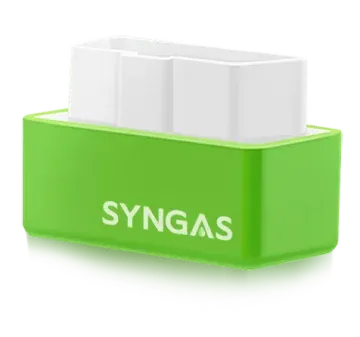
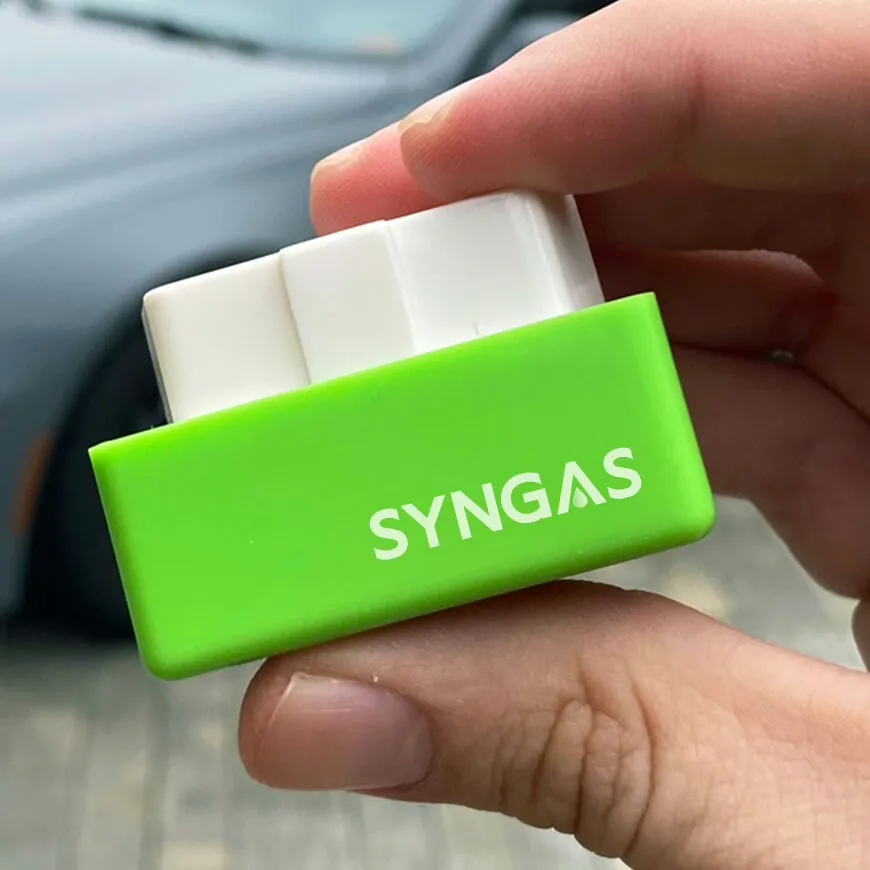
The SynGas OBD Fuel Saver is designed to close that gap. It is a discreet, maintenance-free, plug-and-play device that inserts directly into your vehicle's OBD2 port — the same port mechanics use for diagnostics — and begins a passive learning process to remap the ECU's fuel delivery and ignition timing signals to match your specific driving patterns over time.
-
Zero-Tool Installation — Plug Into Your OBD2 Port The OBD2 port is standard on every gas and diesel vehicle built after 1996, mandated by federal emission regulations. SynGas plugs directly in — no wiring, no mechanical work, no voided warranties. Installation takes under 10 seconds.
-
Adaptive ECU Signal Optimization — Not a Static Remap Unlike a traditional tune that forces fixed parameters onto your ECU, SynGas dynamically optimizes voltage and timing signals based on your actual driving behavior. It learns your patterns and adjusts accordingly — meaning it keeps improving over time as it accumulates more driving data.
-
Fuel Injection Timing Optimization One of the primary levers SynGas works on is fuel injection timing — the precise moment fuel enters the combustion chamber relative to piston position. Even marginal improvements in injection timing translate directly into measurable MPG gains across all driving conditions.
-
Mixed Driving Performance — City and Highway Our 30-day test covered a mix of urban stop-and-go conditions and sustained highway driving. SynGas showed the most pronounced efficiency gains in mixed driving scenarios — the conditions that represent the majority of real-world vehicle use patterns.
-
Completely Silent and Maintenance-Free Once installed, SynGas runs entirely in the background. No apps, no configuration menus, no ongoing maintenance. It draws minimal power from the OBD2 bus and requires no user interaction whatsoever after the initial installation.
We're going to tell you something the product's own marketing page doesn't emphasize enough — because we believe that honesty about expectations is what separates a satisfied customer from a disappointed one.
The Disarming Truth: How SynGas Actually Works — And What to Honestly Expect
Let's be direct about what SynGas is — and what it isn't. It is not a $1,000 engine remapping chip. It does not physically rewrite your ECU firmware, does not alter your vehicle's warranty-protected core programming, and does not produce the same magnitude of change as a professional dyno tune performed by an experienced technician on a specialized vehicle.
What SynGas is: a smart voltage and signal optimizer that communicates with your vehicle's ECU through the OBD2 protocol, operating within the adaptive learning parameters that every modern ECU already has built in. It nudges those parameters toward fuel efficiency by feeding the ECU optimized signal data calibrated to your driving profile.
🔄 The Calibration Phase — The Part Nobody Talks About Enough
This is the single most important piece of information for setting correct expectations. SynGas requires a calibration phase to function as designed.
Before making any purchase decision, you need to know whether your vehicle is compatible and what the responsible usage guidelines are. Here is the complete picture.
Engine Compatibility & Safety: The Complete Transparency Guide
✅ Compatible Vehicles
❌ Not Compatible
Manufacturer claims are one data point. What are real drivers who completed the full calibration window actually reporting?
Real Driver Results: What People Are Saying After the Calibration Phase
We analyzed community data across automotive forums, verified review platforms, and direct user reports. The consistent pattern: drivers who evaluated SynGas after the full 150–300 mile calibration window report meaningfully different outcomes than those who assessed it at the 50-mile mark. The post-calibration feedback is predominantly positive; the early-phase feedback is mixed — exactly as the technology's learning curve would predict.
After 30 days of testing, our editorial verdict is clear. Here's the current official pricing and the recommended deal for serious buyers.
The Lume-Trixa Verdict & Best Available Deal
SynGas OBD Fuel Saver 2026 — Highly Recommended
Rating: 4.7 / 5.0 — Genuine, measurable fuel efficiency gains for any standard gas or diesel vehicle post-1996. The calibration window requires patience. The results after that window are consistent and real.
Our bottom line: SynGas is not for the driver who wants instant overnight results or who owns a hybrid vehicle — it will not serve those use cases. It is unambiguously the right investment for the driver of a standard gas or diesel vehicle who is willing to let the device complete its calibration cycle and wants a maintenance-free, plug-and-play route to meaningful, ongoing fuel savings — protected by a zero-risk 30-day money-back guarantee.
Maximum Discount Bundle
To ensure you receive the genuine SynGas device with the full adaptive ECU algorithm and official guarantee, purchase exclusively through the official website. Unauthorized third-party sellers distribute inferior imitation devices that do not perform as described.